

Dental no-shows cost the average practice between $150,000 and $250,000 every year. Every empty chair means lost revenue, wasted staff time, and disrupted patient care. Traditional phone reminders and text messages helped in the past, but t
hey’re not enough anymore. Patients today expect instant, personalized digital communication through their favorite apps and channels.
AI-powered solutions are changing how dental clinics manage appointments. These smart systems can cut no-show rates by up to 60% while reducing admin work by half. This isn’t about replacing your front desk team. It’s about giving them better tools to do their jobs. Let me show you nine proven ways AI helps dental practices keep their schedules full and patients engaged.
Why Dental No-Shows Happen (and Why They’re Getting Worse)
Patients miss dental appointments for reasons that haven’t changed much over the years. Forgetfulness tops the list, especially as people juggle busier schedules. Dental anxiety still keeps patients away, particularly when they’re facing more than a simple cleaning. Scheduling conflicts pop up when patients book months in advance and then life gets in the way.
- Forgetfulness is the biggest issue: People book appointments weeks ahead and completely forget as work, family, and personal stuff takes over their attention
- Fear and anxiety hold people back: Root canals, extractions, and other procedures create real fear that makes patients avoid or postpone their visits
- Life gets complicated fast: What seemed like a good time three months ago doesn’t work when urgent meetings appear or family emergencies happen
- Insurance creates confusion: Patients cancel when they’re unsure about coverage or worried about surprise bills they can’t afford
- Digital expectations aren’t met: Modern patients want instant booking, self-service options, and quick answers like they get from Uber or DoorDash
The Real Cost of Missed Appointments for Dental Clinics
Let’s look at the actual numbers. If your hygiene slot is worth $200 and you get 10 no-shows weekly, that’s $104,000 in lost yearly revenue just from cleanings. Add in crowns, implants, and cosmetic procedures, and you’re looking at massive losses. But the financial damage goes way beyond just the empty appointment slot itself.
- Direct revenue disappears forever: Each missed appointment is money you’ll never recover, with most practices losing 15-20% of potential income to no-shows
- Staff time gets completely wasted: Your front desk spends hours calling for confirmations, chasing no-shows, and scrambling to fill sudden gaps
- Your schedule falls apart: Empty slots leave hygienists and assistants sitting idle, killing productivity and hurting team morale across the board
- Treatment plans get abandoned: Patients who no-show once often quit their entire treatment plan, damaging their health and your case acceptance
- Old reminder methods fail: Single texts 24 hours before appointments don’t consider individual behaviors, preferences, or warning signs that predict cancellations
1. AI-Driven Multi-Channel Reminders (WhatsApp, SMS, Email)
Old reminder systems send identical messages to everyone at the same time through one channel. AI-powered multi-channel reminders completely change this game by learning what each patient prefers. The system delivers reminders through whatever channel your patient uses most, whether that’s WhatsApp, SMS, email, or voice calls. It sends them at exactly the right times when patients actually pay attention.
- Smart timing based on behaviour: AI figures out when each patient typically checks messages and sends reminders during those peak times, not random 24-hour windows
- Learning channel preferences: The system tracks which method each patient responds to best and uses that channel for all future messages automatically
- Multiple reminder touchpoints: Patients get intelligently spaced messages at 7 days out, 48 hours before, 24 hours before, and 2 hours before their visit
- Automatic backup methods: When a patient doesn’t open a WhatsApp message, AI resends it via SMS or makes a phone call to guarantee delivery
- Personalized message details: Every reminder includes specific appointment info, parking directions, prep instructions, and treatment details for that exact patient
2. Smart Rescheduling Tools That Reduce Last-Minute Cancellations
The second a patient thinks about cancelling is when you need to make rescheduling super easy. Smart AI tools put one-tap reschedule links right inside reminder messages. When patients click these links, they instantly see other available times without calling your office or fighting with complicated booking pages. The AI even spots phrases in replies that hint at cancellation, like “I’m not sure I can make it” and immediately offers better times before the patient officially bails.
- One-click reschedule buttons: Patients tap a link in their message and see available slots that match their appointment type and preferred days instantly
- AI detects cancellation hints: The system scans patient replies for keywords showing hesitation or doubt, then jumps in with alternative times automatically
- Smart slot suggestions: Alternative times are based on the patient’s history, favorite days, and treatment needs instead of random available slots
- Less work for staff: Front desk teams stop playing endless phone tag trying to reach patients, reschedule appointments, and fill sudden openings
- Better conversion rates: Patients who can reschedule with one tap are 70% more likely to show up compared to those who have to call
3. AI Waitlist Automation to Fill Empty Slots Fast
Every canceled appointment is actually an opportunity for another patient who’s been waiting for care. AI waitlist automation changes how you handle last-minute openings by instantly messaging the right patients when slots open up. The system doesn’t blast everyone on your waitlist. It intelligently picks patients based on treatment urgency, appointment type match, how close they live, and their value to your practice.
- Instant cancellation alerts: AI watches your schedule constantly and sends waitlist notifications within seconds when openings appear on the calendar
- Smart patient ranking: Patients get prioritized by treatment urgency, wait time, distance from your clinic, and potential appointment value automatically
- Treatment matching: Only waitlist patients needing treatments that fit the available slot and resources get notified about that specific opening
- Automatic booking confirmation: When a waitlist patient grabs a slot, AI handles confirmation, sends details, and removes them from the list with zero staff work
- Gaps get filled quickly: Top practices fill 80-90% of last-minute cancellations through automated waitlists, compared to 30-40% with manual calling
4. AI-Powered Predictive Analytics for At-Risk Appointments
Not every appointment has the same chance of getting cancelled. AI predictive analytics gives every scheduled appointment a risk score by analysing dozens of factors that historically predict no-shows. Patients with past missed appointments, late-night impulse bookings, appointments scheduled far out, or who ignore reminder messages get higher risk scores. The system then automatically triggers extra help for risky appointments while letting safe ones proceed normally.
- Past behaviour analysis: AI reviews each patient’s appointment history including previous no-shows, late arrivals, reschedule patterns, and when they typically cancel
- Booking pattern tracking: Appointments made at certain times, for specific procedures, or through particular channels show different cancellation odds the AI learns
- Engagement monitoring: Patients who don’t open reminders or respond to confirmations get higher risk scores that trigger stronger communication efforts
- Automatic extra attention: High-risk appointments get bonus reminder messages, different tones, or staff flags to make personal follow-up calls
- Improving accuracy over time: The system gets smarter as it analyses which interventions work best for different patient types and appointment kinds
5. Personalized Patient Communication With AI
Generic appointment reminders get deleted or ignored by busy patients. Personalized messages that use patient names, mention their specific treatment, include their dentist’s name, and provide relevant prep instructions create real connection. AI personalization automatically customizes every message using patient data, appointment details, and individual situations. Someone getting wisdom teeth pulled receives totally different messaging than someone coming for a cleaning.
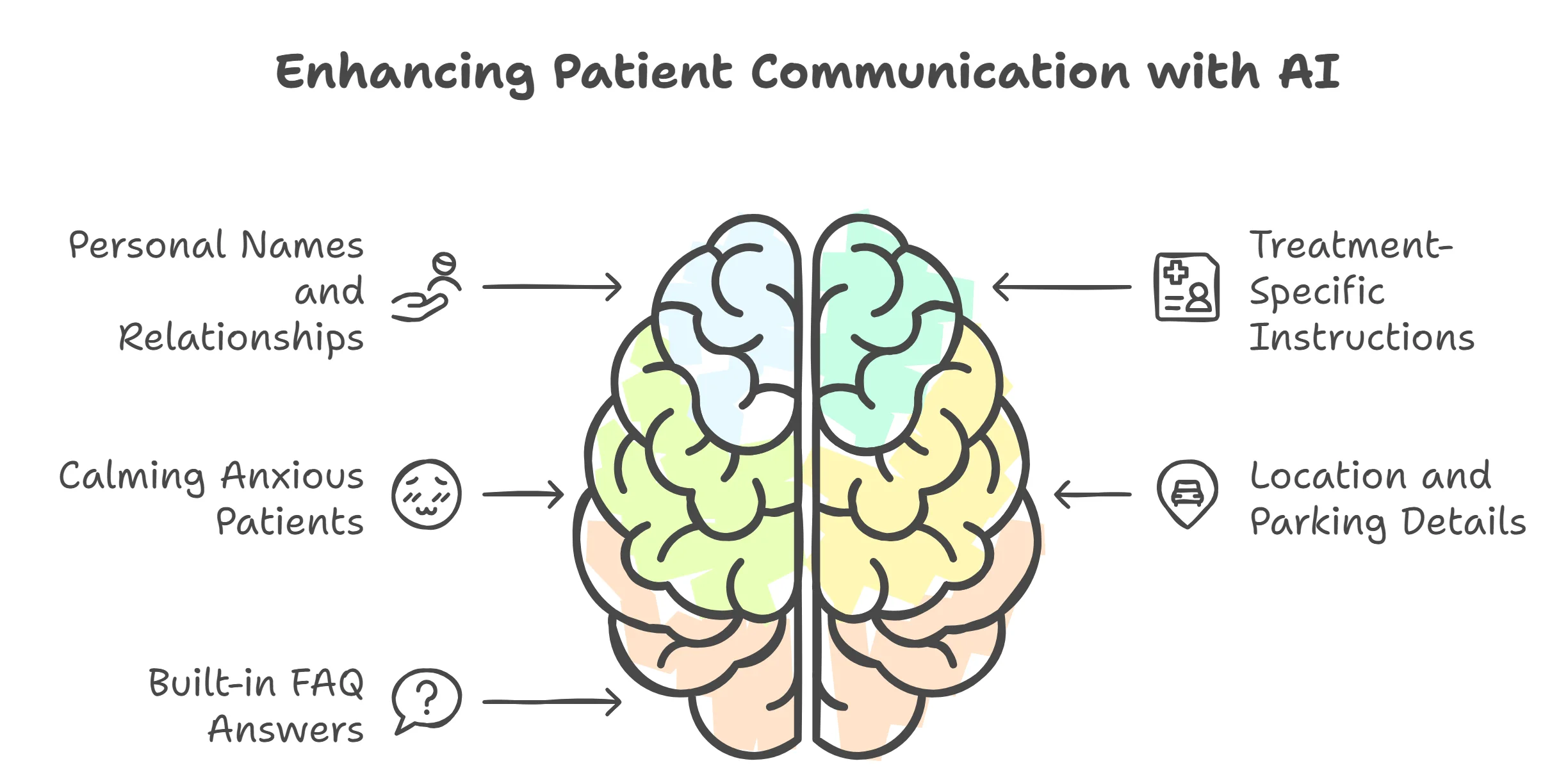
- Personal names and relationships: Every message addresses patients by name and mentions their specific dentist or hygienist, creating human connection despite automation
- Treatment-specific instructions: Patients get customized prep guidelines for their exact procedure, from fasting rules to medication changes to what they should expect
- Calming anxious patients: For scary procedures, AI includes reassuring language, pain management details, and sedation option reminders to reduce fear
- Location and parking details: Messages automatically include directions, parking spots, check-in steps, and estimated visit length for each clinic location
- Built-in FAQ answers: AI answers common questions right in the chat like “Do I need to fast?” or “Take my meds?” based on the treatment type
6. AI-Driven Two-Way Messaging for Common Patient Questions
Patients often cancel simply because they can’t reach your office to ask a quick question. Regular phone systems mean waiting on hold, leaving voicemails, or playing phone tag until they give up and cancel out of frustration. AI two-way messaging lets patients text questions and gets instant, accurate answers 24/7 without bothering staff. The system handles common questions about prep, location, parking, insurance, costs, and rescheduling automatically.
- Instant answers anytime: Patients get immediate responses to common questions at night and on weekends when offices are closed and worry peaks
- Understanding natural questions: AI interprets questions phrased many different ways, from “Do I fast?” to “Can I eat before?” and gives the right answer
- Covering all common topics: The system handles questions about prep requirements, bringing kids, parking locations, insurance checks, treatment prices, and schedule changes
- Removing frustration barriers: When patients get instant answers to simple questions, they’re way less likely to cancel out of confusion or annoyance
- Flagging complex questions: Difficult questions, clinical concerns, or sensitive topics automatically get sent to human staff during business hours for proper handling
7. Automated Follow-Ups for Patients Who Don’t Respond
Some patients ignore the first reminder, delete the second, and never confirm until it’s too late. Automated follow-up sequences solve this by intelligently chasing unresponsive patients with escalating messages. The AI tracks whether patients opened messages, clicked links, or engaged at all, then adjusts the strategy. Patients who haven’t opened anything might get a phone call, while those who opened but didn’t respond get a friendly text asking if they need to reschedule.
- Tracking message opens: The system monitors whether patients opened reminders and adjusts follow-up strength based on engagement levels shown
- Escalating urgency levels: Follow-ups progress from friendly reminders to urgent “Haven’t heard from you” notes to final “Please confirm or reschedule” messages
- Switching communication channels: When WhatsApp goes unread, AI switches to SMS, then email, then triggers a phone call to reach patients somehow
- Varying the message tone: Early follow-ups stay helpful and friendly while later messages add appropriate urgency without sounding angry or pushy
- Converting silent patients: Practices using smart follow-ups convert 40-50% of initially quiet patients into confirmed appointments that would’ve no-showed otherwise
8. AI-Powered Appointment Confirmation Flows
Confirmation requests let patients commit to appointments and give you advance warning about potential problems. AI confirmation flows make this effortless with one-tap confirm or reschedule buttons through WhatsApp or SMS. Patients simply tap “Confirm” and they’re done in two seconds. If they don’t respond, AI automatically sends follow-up confirmation requests with increasing urgency. You get real-time dashboard visibility showing exactly which appointments tomorrow remain unconfirmed and potentially risky.
- One-tap confirming: Patients confirm appointments with a single button tap, removing any effort or friction that might stop them from committing
- Automatic reminder escalation: Patients who don’t confirm within 24-48 hours get additional prompts asking them to confirm or pick a new time
- Easy reschedule access: The confirm message includes an equally simple reschedule button for conflicted patients to pick new times instead of just skipping
- Live schedule visibility: Managers see real-time dashboards showing confirmation status for every appointment, allowing proactive outreach to unconfirmed valuable visits
- Daily risk calculations: The system calculates schedule risk scores based on confirmation rates, helping you prepare for gaps and activate waitlists early
9. Integrated AI Solutions Beyond Just Reminders
The smartest AI systems don’t just prevent no-shows. They manage the entire patient journey from first contact to long-term retention. These platforms combine appointment reminders with new patient lead capture, automated pre-visit forms, insurance verification, post-visit recall reminders, and review requests. Creating a seamless automated experience throughout every patient touchpoint reduces admin work, improves satisfaction, and builds stronger relationships that naturally reduce cancellations.
- Capturing new leads automatically: AI chatbots on your website instantly engage new patient inquiries, answer questions, and book first appointments without staff help
- Pre-visit paperwork automation: The system sends digital intake forms, medical history questions, and insurance info requests before appointments, saving check-in time
- Verifying insurance coverage: AI tools check patient insurance eligibility and coverage details automatically, eliminating confusion and financial surprises causing cancellations
- Managing recall reminders: After visits, AI handles recall reminders for six-month cleanings and follow-ups, keeping patients engaged in ongoing care relationships
- Generating online reviews: Automated post-appointment messages request reviews from happy patients, building your reputation while maintaining consistent communication touchpoints
How to Get Started With AI No-Show Reduction
Getting started with AI appointment management doesn’t require huge technology overhauls or months of setup work. Most modern systems connect directly with popular practice management software and go live within days. The key is taking a step-by-step approach that starts with your biggest impact channels and expands gradually as your team gets comfortable.
- Pick your main channels first: Start with WhatsApp and SMS since they get the highest open rates, then add email and voice as backup options
- Connect to your current software: Make sure your AI platform works smoothly with Dentrix, OpenDental, Eaglesoft, or whatever system you already use daily
- Build your reminder sequence: Set up timing and content for your multitouch campaign, typically at 7 days, 48 hours, 24 hours, and 2 hours out
- Turn on waitlist features: Enter your waitlist patients and set up priority rules based on treatment urgency, patient value, and booking preferences
- Activate risk predictions: Let the system analyse your historical data and start scoring appointment risk so you can focus efforts where they matter most
- Train your team properly: Help staff understand how AI supports their work instead of replacing them, and when human follow-up adds real value
Conclusion
Reducing dental no-shows isn’t about your team working harder or making more phone calls. It’s about working smarter with AI technology that meets modern patients where they are and makes keeping appointments easier than cancelling them. The practices winning today have embraced smart automation that personalizes every interaction, predicts problems before they happen, and fills gaps instantly when they appear. Your front desk doesn’t need more tasks. They require better tools that multiply their impact while letting them focus on human connections that make your practice special.
Ready to transform your appointment management and recover hundreds of thousands in lost revenue? See how AI-powered patient communication can cut your no-show rate in half while giving your team their time back.
FAQ Section
What is the best way to reduce dental no-shows?
The most effective approach combines AI-powered multichannel reminders through WhatsApp and SMS with intelligent confirmation flows, predictive analytics that identify at-risk appointments, and automated waitlist management that fills cancellations instantly. This comprehensive strategy addresses both prevention and quick recovery when cancellations do occur.
Can AI reminders actually prevent cancellations?
Yes, AI reminders achieve dramatically better results than traditional single-message systems by delivering personalized messages through each patient’s preferred channel at optimal times, with multiple touchpoints and easy one-tap rescheduling options. Practices typically see 45-60% reductions in no-show rates within three months of implementation.
Is AI appointment messaging HIPAA and GDPR-compliant?
Reputable AI dental communication platforms are specifically designed to meet HIPAA requirements in the United States and GDPR standards in Europe, with encrypted messaging, secure data storage, proper consent management, and comprehensive audit trails. Always verify that any platform you consider explicitly guarantees compliance with relevant healthcare privacy regulations.
Do AI chatbots replace front-desk staff?
No, AI Chatbots tools augment and empower front desk teams rather than replacing them. The technology handles repetitive tasks like sending reminders, answering common questions, and managing waitlists, which frees staff to focus on complex patient needs, treatment coordination, insurance issues, and personal relationship building that requires human judgment and empathy.
How much do AI no-show reduction systems cost?
Pricing varies widely based on practice size and features, typically ranging from $200-800 per month for single-location practices. However, when a system recovers even 5-10 missed appointments per week worth $150-300 each, practices see 10-20x return on investment, making the cost negligible compared to the recovered revenue and saved staff time.


