

Local service businesses across the UK are under growing pressure to maintain consistent communication, reduce missed appointments, and build long-term customer loyalty. With competition increasing in every region, even small service providers must find practical ways to stay connected with clients without adding more workload to their day.
This is why understanding How Local Service Businesses Benefit from Automated Follow-Ups is becoming essential for modern growth. Automated follow-up systems allow businesses to stay organised, communicate reliably, and deliver a smoother customer experience with minimal manual effort.
What Are Automated Follow-Ups For Local Service Businesses?
Automated follow-ups refer to scheduled or triggered messages sent to customers without requiring manual effort every time. They help businesses stay consistent with communication throughout the customer journey, from bookings and reminders to review requests and payment notifications. For local trades and service providers, automated follow-ups act as the backbone of reliable communication and ensure that every customer receives timely updates. This technology supports long-term relationships and builds trust, helping businesses operate professionally and efficiently at all times.
Definition of Automated Follow-Ups
- A system that sends scheduled or trigger-based messages automatically
- Helps businesses maintain consistent communication with every customer
- Removes repetitive manual tasks for teams and staff
- Ensures customers always receive timely information and reminders
Common Tools Used in Automation for Local Services
- Booking platforms offering automated reminders and confirmations
- CRM systems that deliver personalised follow-up sequences
- Messaging tools that support SMS, email, and WhatsApp follow-ups
- Workflow automation platforms designed for small service providers
How Automation Supports Customer Communication
- Provides timely updates at each step of the customer journey
- Sends confirmations, reminders, follow-up requests, and notifications
- Keeps customers engaged without requiring manual intervention
- Reduces miscommunication and improves customer satisfaction
How Can Automated Follow-Ups Improve Customer Retention For Local Businesses In The UK?
Customer retention is one of the strongest drivers of sustainable growth for local service providers. Automated follow-ups help businesses stay in touch with customers after each appointment, encouraging them to return for repeat services. When clients feel valued and consistently supported, they are far more likely to book again—especially in competitive markets.
In the UK, where customers often compare multiple providers, staying present through automated communication significantly increases trust and loyalty. Strong follow-up sequences ensure customers don’t forget about your brand and always feel welcomed back.
Role of Follow-Ups in Building Repeat Business
- Reminds customers of upcoming service needs or seasonal maintenance
- Encourages clients to book again through timely check-ins
- Keeps your business top-of-mind between appointments
- Builds long-term relationships through consistent communication
Examples of Retention Success in UK Local Services
- Tradespeople increasing repeat bookings through service reminders
- Beauty and wellness clinics boosting customer visits with drip messages
- Home services maintaining recurring clients with scheduled check-ups
- Local repair businesses improving loyalty with personalised follow-ups
Personalization Through Automation to Enhance Loyalty
- Sends tailored messages based on service history
- Addresses customers by name and acknowledges previous bookings
- Allows targeted offers to returning customers
- Strengthens trust through relevant and meaningful communication
What Specific Benefits Do Local Trades and Service Businesses See From Automated Follow-Ups?
Automated follow-ups provide measurable advantages for local trades and service businesses by improving organisation, communication, and revenue. They help small teams manage their workload more effectively, ensure customers stay informed, and create opportunities for additional sales.
By automating essential touchpoints, businesses can focus on delivering quality service while keeping their operations running smoothly. From better time management to increased profitability, these systems deliver clear benefits in everyday business activities.
Time Savings and Improved Efficiency
- Reduces manual communication tasks for staff
- Automates reminders, follow-ups, and confirmations
- Minimises mistakes caused by human oversight
- Creates more availability for service delivery
Increased Revenue Through Upselling and Cross-Selling
- Sends targeted offers after a completed service
- Promotes additional services customers may need
- Helps customers discover upgrades or premium options
- Encourages larger bookings through well-timed messages
Better Appointment Management
- Confirms appointments instantly to reduce confusion
- Sends reminders to minimise no-shows
- Provides customers with updated schedules
- Helps staff organise their daily service routes
How Do Automated Follow-Ups Reduce No-Shows and Missed Appointments for UK Service Providers?
Missed appointments are one of the biggest challenges for local service providers, often causing lost income and wasted time. Automated follow-ups play a key role in reducing no-shows by reminding customers of their booked services and confirming their availability.
Clear communication helps customers stay accountable to their schedule and reduces last-minute cancellations. With reliable reminder systems, UK businesses can operate more predictably, increase revenue stability, and reduce unnecessary downtime.
Reminder Message Frequency and Timing
- Sends reminders 24–48 hours before appointments
- Provides same-day reminders for added clarity
- Allows custom scheduling based on service type
- Helps customers plan their day effectively
Multi-Channel Follow-Up Strategies (SMS, Email, Calls)
- Uses SMS for urgent reminders and quick confirmations
- Sends email updates with detailed information
- Provides automated call reminders when needed
- Increases customer reach through multiple channels
Impact on Customer Accountability and Scheduling
- Encourages customers to confirm or reschedule on time
- Reduces forgotten appointments and unexpected cancellations
- Strengthens communication between business and customer
- Helps staff plan their work schedule more accurately
Can Automated Follow-Ups Help Local Businesses Accelerate Cash Flow?
Positive cash flow is essential for local service businesses, especially smaller operations with tight budgets. Automated follow-ups help accelerate payments through timely reminders, invoices, and follow-up notifications.
Instead of waiting for customers to remember their outstanding payments, businesses can rely on automated systems to deliver professional, consistent reminders. These tools help reduce late payments, improve billing accuracy, and create a more predictable financial cycle.
Faster Payment Reminders and Invoicing
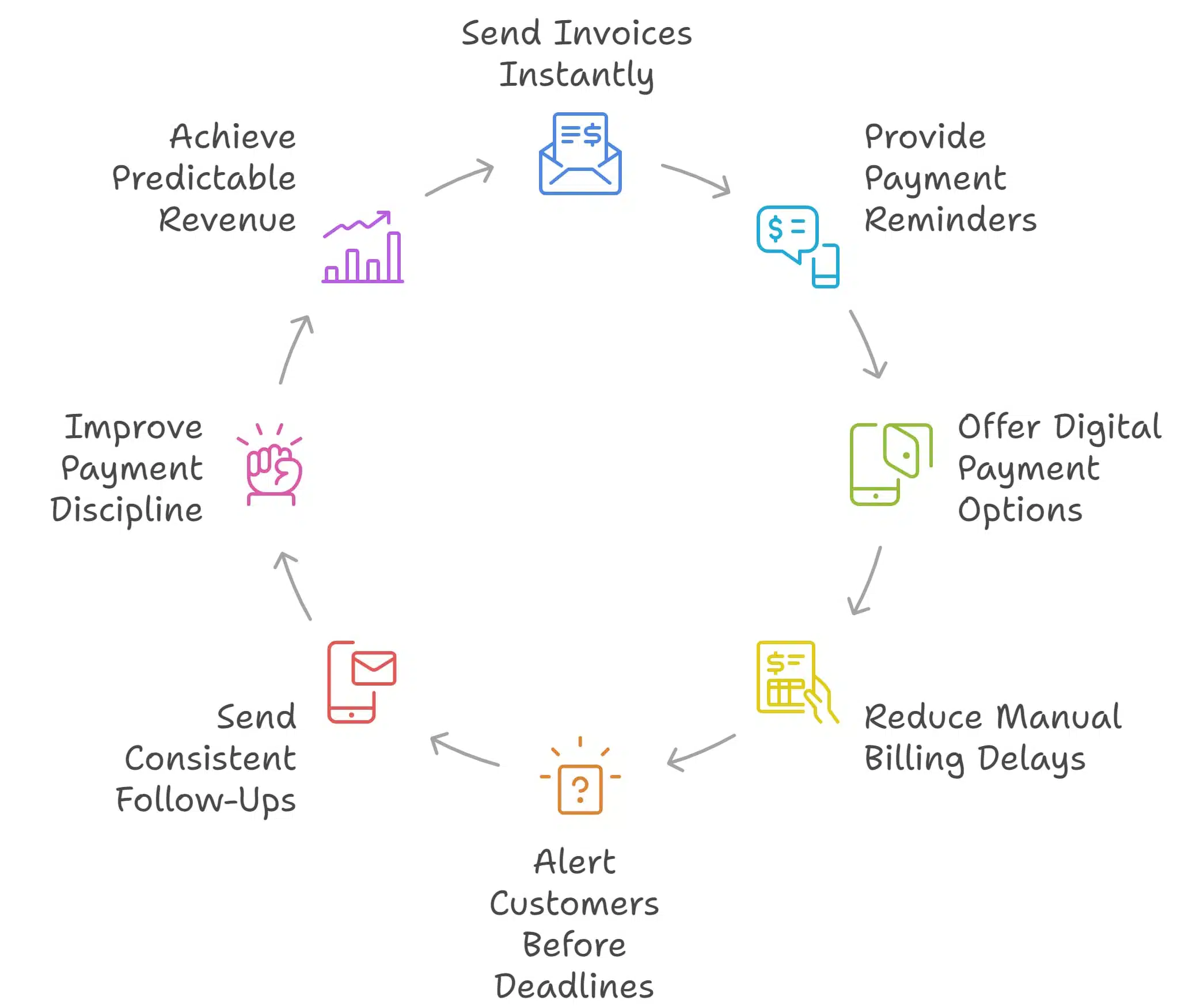
- Sends invoices instantly after service completion
- Provides automatic payment reminders for overdue bills
- Offers clear instructions for digital payment options
- Reduces manual billing delays
Reducing Late Payments Through Automated Messaging
- Alerts customers before payment deadlines
- Sends follow-ups at consistent, professional intervals
- Helps customers stay aware of outstanding balances
- Improves payment discipline among repeat clients
Case Studies of Cash Flow Improvement
- Tradespeople receiving payments faster due to automated invoicing
- Cleaning services reducing overdue bills through reminders
- Local clinics improving payment cycles with structured follow-ups
- Home maintenance businesses achieving more predictable revenue
How Do Automated Follow-Ups Save Time and Cut Operational Costs in Small UK Service Businesses?
Small service businesses often operate with limited staff and resources, making efficiency essential. Automated follow-ups reduce repetitive tasks and free up time that can be used for actual service delivery.
By minimising manual communication, businesses reduce operational costs and prevent burnout among staff. Automating these tasks ensures smoother workflow management and keeps the business running efficiently without additional labour expenses.
Minimizing Manual Task Load on Staff
- Eliminates repetitive messaging tasks
- Reduces the need for additional administrative staff
- Prevents communication errors caused by rush or fatigue
- Helps staff stay focused on core service tasks
Automation’s Role in Streamlining Customer Support
- Provides instant responses to common customer queries
- Keeps customers informed without waiting for replies
- Reduces call volume through proactive communication
- Improves the overall customer experience
Cost-Benefit Analysis of Follow-Up Automation
- Low monthly costs compared to hiring additional staff
- Saves hours of labour each week
- Helps businesses generate more revenue through upsells
- Reduces financial losses from missed appointments
In What Ways Do Automated Follow-Ups Enhance Customer Satisfaction and Reviews?
Customer satisfaction is vital for local service providers, influencing repeat business, referrals, and online reputation. Automated follow-ups help businesses maintain strong relationships with their customers by offering timely support and ensuring every client feels valued.
By gathering feedback, encouraging reviews, and addressing issues quickly, automated communication helps local businesses maintain a strong reputation in their community.
Gathering Feedback Through Automated Surveys
- Sends short surveys after appointments
- Helps businesses collect customer insights easily
- Identifies areas for improvement
- Encourages customers to share honest experiences
Encouraging Positive Online Reviews and Referrals
- Sends automated review requests after successful services
- Makes it easier for happy customers to share feedback
- Drives more visibility on Google and local platforms
- Helps attract new customers through referrals
Addressing Customer Concerns Proactively
- Alerts businesses when customers report issues
- Allows quick follow-up to resolve problems
- Improves customer trust and satisfaction
- Prevents negative reviews through proactive action
How Does Automation Integrate With Existing Booking and CRM Systems for Local Service Businesses?
Integration plays a crucial role in ensuring automated follow-ups run smoothly within a business’s existing systems. Most UK booking platforms and CRM systems are designed to synchronise with automation tools, enabling seamless data flow and accurate customer records. These integrations reduce duplicate work and ensure that every customer receives the correct information at the right time.
Compatibility with Popular UK Booking Software
- Works with platforms like Fresha, Calendly, and Setmore
- Supports local booking systems used in trades and wellness
- Integrates smoothly with appointment calendars
- Ensures accurate scheduling data for reminders
Seamless Data Flow Between CRM and Follow-Up Automation
- Syncs customer profiles and service history automatically
- Updates customer information across systems without manual input
- Ensures precise messaging based on customer behaviour
- Reduces errors caused by outdated information
Examples of Integration Workflows for Efficiency
- Automatic reminder sequences triggered by new bookings
- Post-service follow-ups sent immediately after completion
- Feedback surveys triggered based on service type
- Payment reminders scheduled after invoicing events
What Are Best Practices for Implementing Automated Follow-Ups Without Losing the Personal Touch?
While automation improves consistency, businesses must ensure their communication still feels personal and genuine. The key is to craft messages that reflect the business’s tone while keeping them relevant and customer-focused. Balancing automation with occasional human touchpoints helps build trust and makes customers feel valued.
Crafting Personalized and Relevant Follow-Up Messages
- Use the customer’s name and reference past services
- Keep messages short, friendly, and helpful
- Tailor offers based on customer needs
- Maintain a warm and conversational tone
Balancing Automation with Human Interaction
- Use automation for routine communication
- Add manual follow-ups for complex customer needs
- Allow staff to step in when personalised support is required
- Keep communication flexible and customer-focused
Monitoring and Adjusting Follow-Up Campaigns Based on Feedback
- Review message performance regularly
- Adjust timing and tone based on customer responses
- Remove unnecessary messages to avoid annoyance
- Continuously improve communication based on analytics
How Can Local Service Businesses Measure the ROI of Automated Follow-Ups and Track Success?
Tracking ROI helps businesses understand the value of automated follow-ups and fine-tune their strategies. Measuring results such as customer retention, appointment confirmations, and revenue growth provides clear insight into performance.
By using analytics tools and monitoring key metrics, businesses can make data-driven decisions to improve communication and overall efficiency.
Key Metrics to Track (Response, Conversion, Retention)
- Response rates to follow-up messages
- Conversion rates for repeat bookings
- Customer retention over time
- Reduction in no-shows and missed appointments
Tools for Analytics and Reporting
- Built-in reporting features from CRM platforms
- Dashboard summaries from booking systems
- Analytics tools tracking message performance
- Revenue and appointment comparisons over time
Interpreting Data to Optimize Automation Strategy
- Identifying which messages produce the best results
- Improving timing, tone, and style based on data
- Adjusting campaign flow for better engagement
Using insights to boost long-term business growth


