

Lead generation is no longer the main challenge for dental practices. Lead quality is. Every week, dentists waste countless hours dealing with unqualified inquiries from price shoppers, casual browsers who are “just looking,” no-shows who never intended to book, and people who simply aren’t clinically suitable for
the treatments they’re asking about. This drain on time and resources hurts both staff morale and your bottom line.
Pre-qualifying leads before they ever pick up the phone helps dental clinics save valuable time, dramatically increase conversion rates, and focus energy on patients who are genuinely ready for treatment. Modern AI automation has made this process scalable, consistent, and surprisingly simple to implement. In this guide, we’ll walk through proven frameworks, practical AI tools, step-by-step workflows, and real examples that show how pre-qualification transforms your patient acquisition process.
Why Pre-Qualifying Dental Leads Matters More Than Ever
The dental marketing landscape has shifted dramatically. Advertising costs continue climbing year after year, competition intensifies in every major market, and clinic staff time remains limited. Many leads that look promising on paper simply don’t convert into paying patients.
Dental practices face several recurring problems with incoming leads:
- Price shoppers who are only comparing costs with no intention of choosing based on quality
- No-shows who book consultations but never appear
- Low-intent leads who clicked out of curiosity rather than genuine interest
- Clinically unsuitable patients, especially for specialized treatments like implants, orthodontics, or cosmetic procedures
Pre-qualification dramatically improves your marketing ROI, reduces administrative stress on your front desk team, and increases the percentage of consultation bookings that actually convert to treatment. Instead of chasing every lead equally, your team can focus attention where it matters most.
The Hidden Cost of Unqualified Leads for Dental Practices
Beyond the obvious frustration, unqualified leads carry real costs that many practices underestimate. Every minute your front desk spends answering questions from someone who will never book is time taken away from patients who are ready to schedule.
This impacts front desk workload and team morale significantly. Staff members become discouraged when they spend hours following up with leads that go nowhere. Your marketing budget suffers too, because low-quality traffic means you’re paying for clicks and impressions that will never generate revenue.
Perhaps most damaging is the opportunity cost. While your team handles unqualified inquiries, genuinely interested patients may be waiting on hold, getting voicemail, or worse, calling your competitor instead. Speed of response matters enormously in healthcare lead conversion, and unqualified leads create bottlenecks that slow everything down.
How AI Pre-Qualifies Dental Leads Automatically: The Complete System
Modern AI lead qualification works as an intelligent funnel that filters, scores, and routes prospects automatically. Here’s how the complete system operates from first click to booked appointment.
The process begins with lead capture from multiple sources including Google Ads, Facebook campaigns, your website forms, landing pages, and social media profiles. The moment someone expresses interest, an instant AI chatbot engagement begins. This automated assistant answers common questions, explains treatment options clearly, and starts building trust through helpful, conversational interactions.
During the conversation, the AI asks qualification questions naturally. It learns about budget ranges, specific treatment interests, symptoms or concerns, insurance coverage, and timing availability. This feels like a helpful conversation rather than an interrogation.
Behind the scenes, AI lead scoring ranks each prospect by urgency, intent level, and overall fit for your practice. High-scoring leads trigger immediate actions while lower-scoring leads enter different pathways. Automated follow-up sequences via WhatsApp, SMS, or email keep warm leads engaged until they’re ready to book.
What Makes a Dental Lead “Qualified”? Key Indicators to Look For
Not all dental leads are created equal. Several factors determine whether a prospect is likely to convert into a patient:
- Budget range that aligns with your treatment costs
- Treatment urgency based on pain levels or timing needs
- Medical suitability for the procedures they’re interested in
- Insurance coverage or financing options available
- Geography within reasonable distance from your practice
- Timeline and readiness to move forward soon
- Past dental history that indicates they follow through on care
- Response engagement showing genuine interest through interaction
Red flags that indicate unqualified leads:
- Asking only about price with no treatment questions
- Unrealistic budget expectations for complex procedures
- Located far outside your service area
- No sense of urgency or vague timeline
- History of no-shows or cancellations
- Unwilling to share basic information
- Looking for services you don’t offer
AI vs Traditional Lead Generation: Why Old Methods Fall Short
Traditional lead qualification methods create significant friction and delays. When leads must call during business hours, they often reach voicemail or wait on hold. This delay gives them time to call competitors or lose interest entirely.
Static contact forms collect minimal information, usually just name, phone, and email. This leaves your team blind about the lead’s actual needs, budget, or urgency. Manual follow-ups depend entirely on staff availability and consistency. One busy day means leads slip through the cracks.
Perhaps most critically, leads get cold quickly in today’s fast-paced environment. Research shows that response time matters enormously. Leads contacted within five minutes are 21 times more likely to convert than those contacted after 30 minutes. Traditional methods simply can’t achieve this speed consistently.
AI automation fixes each of these problems systematically. It provides instant 24/7 response, gathers detailed qualification data conversationally, follows up consistently without human intervention, and keeps leads warm through personalized engagement. Staff time stops being the bottleneck because AI handles the heavy lifting.
The 5-Step Pre-Qualification Framework for Dental Clinics
Implementing effective lead pre-qualification follows a clear framework that any dental practice can adopt.
Step 1: Capture the Right Information
Start by identifying what you actually need to know. This includes specific treatment type they’re interested in, budget range or financing needs, primary goals and concerns, and any urgent symptoms requiring immediate attention. Don’t ask for unnecessary details that create friction.
Step 2: Use Smart Questions to Filter Intent
Replace long, intimidating forms with AI conversational interfaces that ask questions naturally. The chatbot adapts based on responses, only asking relevant follow-up questions. This feels helpful rather than intrusive and captures much richer data than static forms.
Step 3: Score Leads Automatically
Create clear scoring categories. High-intent leads show urgency, suitable budget, and clear treatment interest. Medium-intent leads are interested but need nurturing around timing or financing. Low-intent leads are gathering information with no immediate plans.
Step 4: Route Qualified Leads to Your Team Instantly
High-intent leads trigger immediate notifications to your front desk for a phone call. Warm leads enter automated nurture sequences with educational content and periodic check-ins. Low-intent leads receive helpful resources and occasional follow-ups to stay top-of-mind.
Step 5: Book Only Pre-Qualified Leads
By the time a lead reaches your scheduling system, you already know they’re qualified. This dramatically increases conversion rates while reducing no-shows because only serious prospects make it to the booking stage.
Pre-Qualifying Dental Implant Leads (High-Value Example)
Dental implant leads require especially thorough pre-qualification because of the treatment’s complexity and cost. The AI needs to gather deeper information to determine true fit.
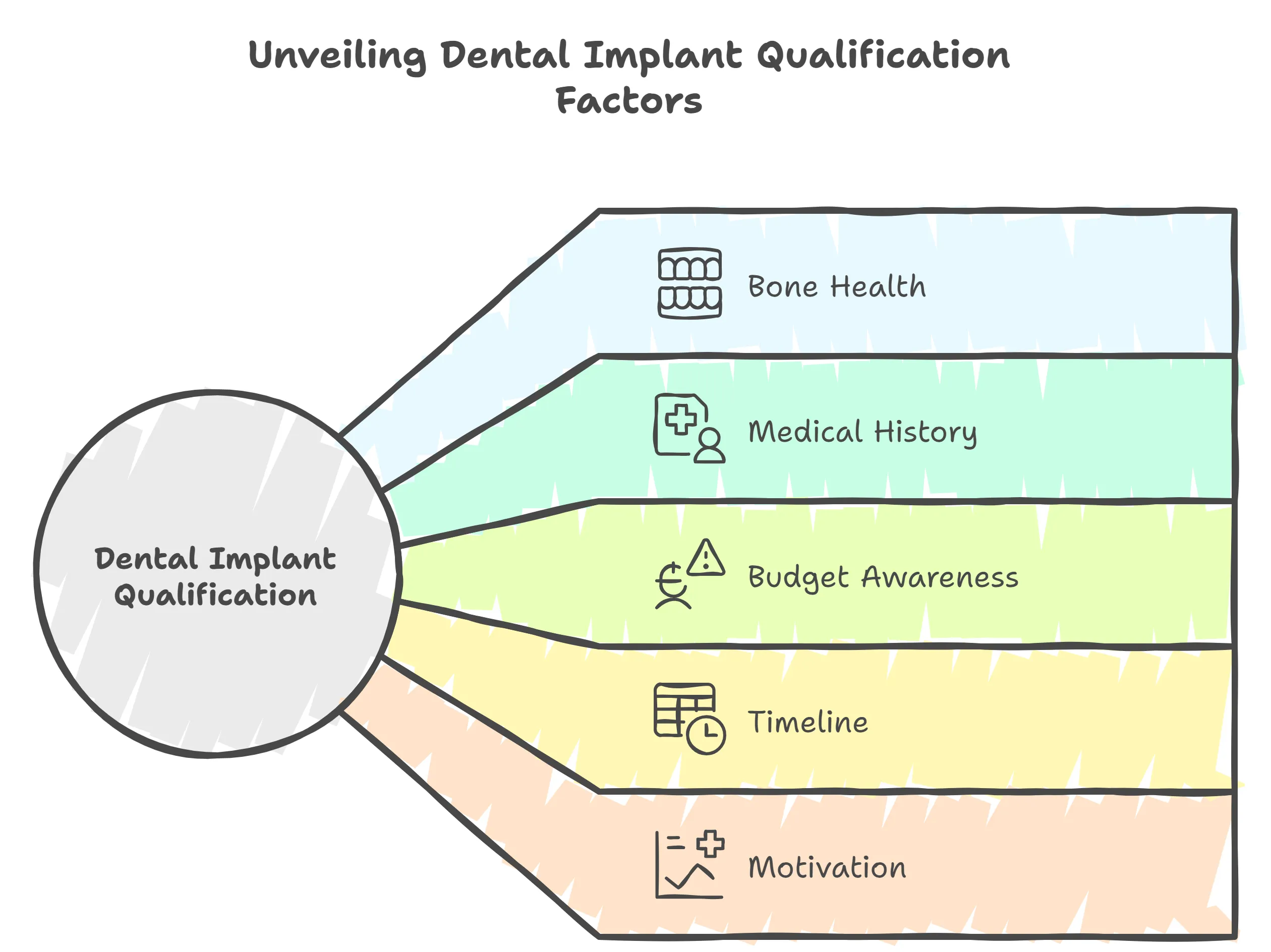
Key qualification factors for implant leads include jawbone quality indicators based on their dental history, relevant medical conditions that might affect candidacy, realistic budget expectations for the full treatment plan, timeline flexibility since implants require multiple appointments, and primary motivation whether driven by pain, aesthetics, or functional needs.
| Qualification Factor | What to Ask | Why It Matters |
| Bone Health | Previous tooth loss timeline, denture use | Determines if grafting needed |
| Medical History | Diabetes, smoking, medications | Affects healing and success rates |
| Budget Awareness | Cost range expectations | Filters out unrealistic expectations |
| Timeline | Urgency and availability | Matches treatment planning needs |
| Motivation | Pain level, aesthetic concerns | Indicates likelihood to proceed |
The AI can ask these sensitive questions in a friendly, educational way that doesn’t feel invasive. For example, instead of bluntly asking “Do you smoke?” it might say “Understanding your lifestyle helps us plan the best approach. Do you currently use tobacco products?” This gentle approach maintains engagement while gathering critical information.
Proper qualification reduces wasted consultation time dramatically. Your implant specialist can focus appointments on candidates who are genuinely suitable rather than spending 30 minutes explaining why someone isn’t a candidate.
From Click to Chair: How CRM & AI Integration Boosts Conversions
The lead journey should flow seamlessly from initial click through to the patient sitting in your chair. Modern integration makes this possible through connected systems.
The ideal pathway looks like: Click on ad, engage with AI chat, complete qualification questions, automatically sync to CRM, receive booking link, get automated reminders, arrive for consultation, enter recall system.
Integration provides full lead visibility so your team sees the complete conversation history and qualification details before the first call. Follow-ups become more effective because messaging references what the lead already shared. Personalization increases because you’re not starting from zero with every interaction.
Automated reminders reduce no-shows significantly. The system can send confirmation texts, day-before reminders, and even pre-appointment instructions automatically.
Popular integration options include GoHighLevel for all-in-one marketing automation, HubSpot for enterprise CRM needs, Dentrix and OpenDental for practice management, and Zapier for connecting different tools together. Most modern AI chatbot platforms offer direct integrations or API connections to these systems.
Mini Case Study: How a Clinic Boosted Conversions by 3× With AI Pre-Qualification
Dr. Martinez runs a cosmetic dentistry practice in a competitive market. She was spending heavily on Google Ads but struggling with lead quality. Her front desk reported that roughly 70 percent of inquiry calls were from price shoppers or people wanting services the practice didn’t offer.
After implementing an AI pre-qualification system, the practice saw dramatic changes within 60 days. No-show rates dropped by 40 percent because only serious leads were booking consultations. The number of high-quality leads who actually scheduled tripled, even though total lead volume stayed similar.
Administrative time decreased by 60 percent as the AI handled initial screening, common questions, and follow-up sequences automatically. Most importantly, patients reported higher satisfaction because they received instant responses and clear information before even calling.
Optimization Strategies: How to Improve Lead Quality Every Month
Pre-qualification isn’t a set-it-and-forget-it system. The most successful practices continuously optimize based on data and results.
Monitor which qualification questions correlate most strongly with booked appointments. You might discover that asking about pain levels predicts conversion better than asking about budget, allowing you to adjust your scoring algorithm.
Add multi-channel follow-up approaches. Some leads prefer WhatsApp, others respond better to SMS, and email works for detailed information. Test different channels to find what works for your demographic.
For highest-intent leads, consider using brief voice note replies from the dentist. This personal touch differentiates your practice and builds strong connection before the first appointment.
Adjust your chatbot’s tone and language based on your patient demographics. A practice targeting younger patients might use casual, friendly language, while a practice focused on executives might adopt a more professional tone.
Use retargeting audiences based on lead qualification status. Leads scored as warm but not ready can see different ads than cold leads, maximizing ad spend efficiency.
Create a lead feedback loop by analyzing patients who convert. Look for patterns in how they answered qualification questions, what objections they raised, and what convinced them to book. Use these insights to refine your qualification criteria monthly.
How to Set Up a Lead Pre-Qualification System in 3 Weeks
Getting started with AI pre-qualification is more straightforward than most practices expect. Here’s a realistic three-week implementation roadmap.
Week 1: Setup & Planning
Choose your AI chatbot platform based on features, integrations, and budget. Set up CRM integration so data flows automatically. Write qualification scripts tailored to your specific treatments and patient demographics. Define your lead scoring criteria clearly so the system knows what constitutes high, medium, and low intent.
Week 2: Build Flows
Create your qualification questionnaire with conversational, friendly language. Set up AI scoring rules based on responses. Build automated booking rules that route high-intent leads appropriately. Design follow-up sequences for each lead category with helpful content and clear calls to action.
Week 3: Launch & Optimize
Start with a small percentage of traffic to test the system with real leads. Monitor conversations to see where leads get stuck or confused. Adjust scoring rules based on initial results. Train your front desk team on how to handle pre-qualified leads effectively. Watch conversion metrics closely and iterate quickly.
Compliance & Patient Privacy: What Dentists Must Know
Healthcare practices must handle patient data with extra care. GDPR and HIPAA compliance aren’t optional, they’re fundamental to operating legally and building trust.
Store only the information you actually need for qualification and follow-up. Avoid asking medical diagnosis questions through the chatbot since only licensed professionals can diagnose conditions. Ensure you have clear consent before sending marketing messages via SMS or WhatsApp.
Use platforms that provide encryption and secure servers for data storage. Make your privacy policy easily accessible and written in plain language patients can understand.
Compliance isn’t just about avoiding legal problems. It builds trust. Patients who see that you take their privacy seriously are more likely to share information openly and move forward with treatment.
Conclusion
Modern dental marketing isn’t about getting more leads. It’s about getting better leads. Pre-qualifying prospects before they call saves your team countless hours, reduces frustrating no-shows, and dramatically increases the percentage of consultations that convert to treatment.
AI and automation make sophisticated lead qualification accessible to practices of any size. The technology is proven, affordable, and surprisingly easy to implement. By adopting pre-qualification workflows, you’ll focus your energy on patients who are ready for care while automated systems handle the filtering and nurturing that used to consume your staff’s time.
Frequently Asked Questions
What is the best way to pre-qualify dental leads?
The most effective approach combines AI chatbots for instant 24/7 engagement with smart qualification questions that assess budget, urgency, and treatment fit. This automated system scores leads in real-time and routes high-intent prospects to your team immediately while nurturing others through automated follow-up sequences.
How does AI help dental clinics filter out bad leads?
AI asks strategic questions conversationally, analyzing responses to identify price shoppers, low-intent browsers, and unsuitable candidates. It scores each lead based on multiple factors like budget alignment, urgency, and engagement level, then routes only qualified prospects to your staff while redirecting others to educational content.
What questions should I ask to qualify dental implant leads?
Essential questions include dental history and bone health indicators, relevant medical conditions affecting candidacy, budget expectations for the full treatment, timeline flexibility for multiple appointments, and primary motivation driving their interest. These factors determine both clinical suitability and likelihood to proceed with treatment.
How do I reduce price-shopping leads in dentistry?
Focus marketing messages on value rather than cost, use AI qualification to identify price-focused questions early, provide educational content about treatment quality and outcomes, and route price shoppers to automated sequences that build value before discussing fees. Pre-qualification naturally filters leads seeking the lowest price versus best care.
Can AI lead generation integrate with my dental CRM?
Yes, most modern AI platforms integrate directly with popular dental CRMs like Dentrix, OpenDental, and Curve, as well as general systems like HubSpot and HighLevel. Integration ensures qualification data, conversation history, and contact information flow automatically into your existing practice management system.
Do pre-qualification forms reduce conversions?
Traditional long forms do reduce conversions, but conversational AI qualification actually increases them. Rather than overwhelming prospects with a lengthy form, AI asks questions naturally through chat, adapting based on responses. This feels helpful rather than intrusive and captures better data while maintaining high completion rates.


