

If you run a business, you’ve probably wondered whether AI voice agents can really replace your human call centre staff. The truth is, both AI and human agents have their place in modern customer service. AI is great at handling simple, repetitive calls quickly and cheaply, while human agents shine when things get complicated or emotional. Most successful businesses today are using a mix of both, letting AI handle the easy stuff while humans deal with the tricky situations that need a real person’s touch.
The customer service world is changing fast. AI voice technology has got so good that many customers can’t even tell they’re talking to a robot any more. But that doesn’t mean human agents are going away. Instead, their role is evolving. They’re becoming specialists who focus on complex problems and building real relationships with customers.
Understanding AI Voice Agents and Human Call Agents
What Are AI Voice Agents?
AI voice agents are smart computer programs that can talk to your customers over the phone. They use artificial intelligence to understand what people are saying, figure out what they need, and give them answers or help them solve problems.
What modern AI voice agents can do:
- Understand normal human speech, not just specific commands
- Answer questions by pulling information from your databases
- Process simple requests like scheduling appointments
- Recognize when a customer is frustrated and needs a human
- Handle multiple calls at the same time without getting overwhelmed
The biggest difference between AI voice agents and old phone menus is that you can actually have a conversation with them. You just talk normally, and they understand you.
What Are Human Call Agents?
Human call agents are real people trained to help customers with all kinds of problems, from simple questions to complicated issues that need real thinking and problem-solving.
What makes human agents valuable:
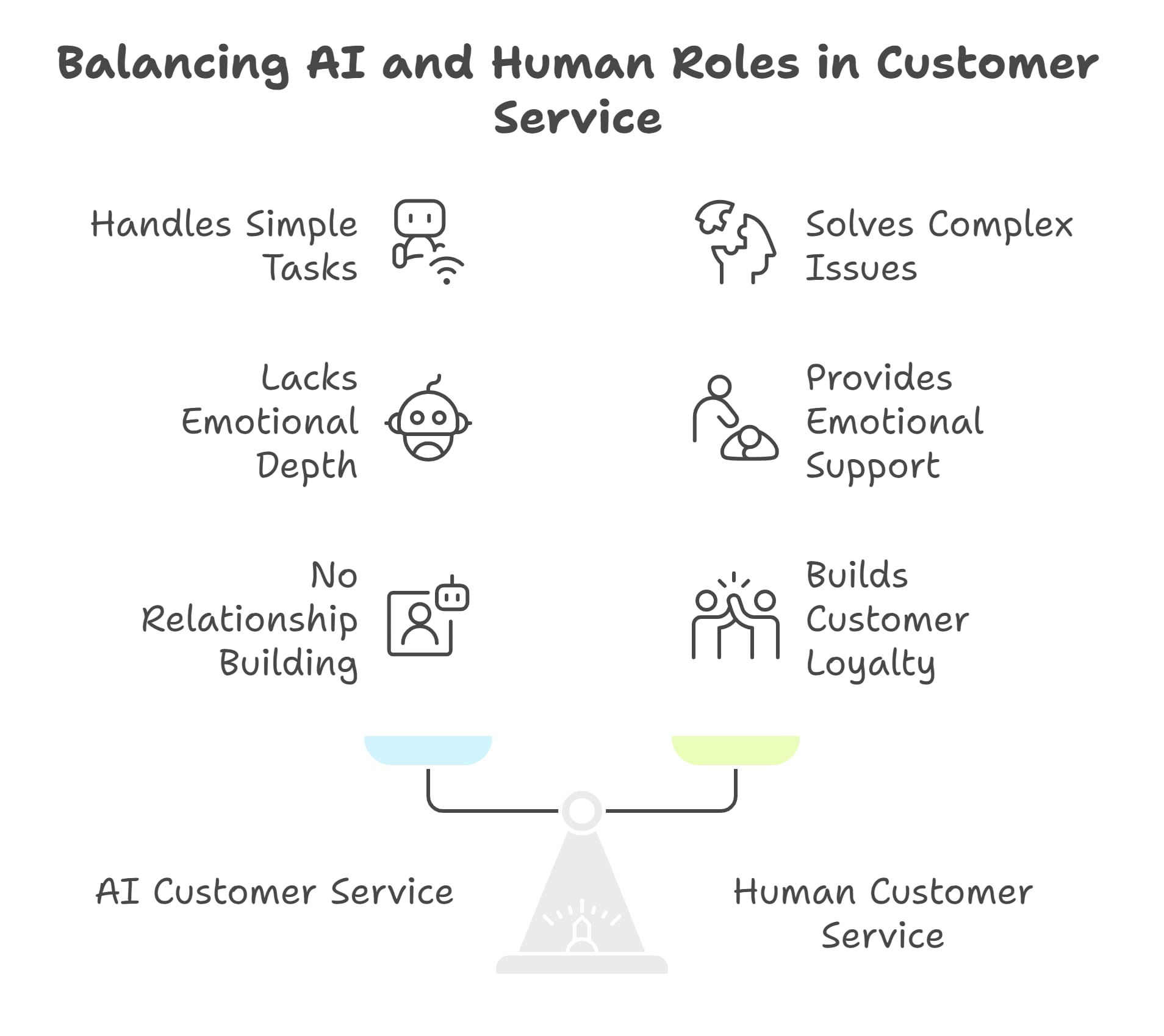
- They understand emotions and respond with real empathy
- They think creatively when usual solutions don’t work
- They make judgment calls and bend rules when it makes sense
- They build genuine connections with customers
- They handle messy, complicated situations that don’t fit a script
Human agents bring something AI can’t replicate yet: genuine human understanding. When a customer is upset or dealing with something sensitive, humans are still the best choice.
Cost Comparison: AI Voice Agents vs Human Agents
Per-Interaction Cost Breakdown
The cost difference between AI and human agents is huge. When you hire human call center agents in the US, you’re paying them $15 to $35 per hour once you add in wages, benefits, and other costs. If the average call takes 6 to 8 minutes, each call costs roughly $2 to $5.
AI voice agents cost way less:
- Most AI platforms charge $0.05 to $0.50 per call or per minute
- A typical 5-minute call costs just $0.25 to $2.50 with AI
- That’s 50% to 90% cheaper than using human agents
Real example: If your business gets 1,000 calls a month, you’re spending $2,000 to $5,000 with human agents. With AI handling most calls, you might spend just $250 to $1,500.
Setup Costs and Ongoing Expenses
Starting with AI requires upfront investment for software and setup, usually between $10,000 and $100,000 depending on customization needs. But once it’s running, training costs are minimal.
Human agents cost money constantly:
- Hiring each new agent costs about $3,000 to $5,000
- Training takes 3 to 6 weeks and costs another $2,000 to $4,000 per person
- Call centres lose 30% to 45% of staff every year, so you’re always hiring
- You need managers, office space, equipment, and benefits
Long-Term ROI and Cost Savings
Most businesses get their money back from AI within 6 to 12 months. If you handle 10,000 calls monthly and let AI take care of 60% to 70% of simple ones, you could save $200,000 to $500,000 annually. Companies typically cut customer service costs by 40% to 60% within two years.
Availability, Speed, and Scalability
24/7 Availability Without Downtime
AI voice agents work all day, every day, without breaks. They don’t need sleep, don’t get sick, and don’t take holidays. This means your customers get help at 3 AM just as easily as at 2 PM.
Why this matters:
- Customers in different time zones get instant help
- No need to pay extra for night shifts or weekend work
- Service quality stays consistent around the clock
Response Speed and Call Handling Time
AI picks up instantly with zero wait times. AI finds information in milliseconds, and average call time is 2 to 4 minutes for routine stuff. Human agents average 6 to 10 minutes per call because they require time to look things up and sometimes ask supervisors for help.
Scaling Support During Peak Demand
During busy periods, AI handles thousands of calls at once without breaking a sweat. You don’t need to predict staffing needs months ahead or panic when you get slammed. Human teams struggle because you need weeks to hire seasonal workers, and new temporary workers usually give lower quality service.
Performance and Efficiency Comparison
Routine Call Handling and Repetitive Tasks
AI is perfect for boring, repetitive calls like checking account balances, scheduling appointments, tracking orders, and answering frequently asked questions. AI does this stuff all day without getting tired or bored.
Accuracy and Consistency
AI gives the same correct answer every single time. It never misremembers a policy, never quotes old information, and never makes typos because it’s tired. Studies show human agents give inconsistent answers 15% to 25% of the time when asked the same question.
Performance Comparison Tables
Table 1: AI vs Human Agent Performance Metrics
| Factor | AI Voice Agents | Human Agents |
| Average Call Time | 2-4 minutes | 6-10 minutes |
| Availability | 24/7 every day | Limited to shifts |
| Calls Handled Simultaneously | Unlimited | One at a time |
| Response Consistency | 99%+ identical | 75-85% consistent |
| Cost Per Call | $0.25-$2.50 | $2.00-$5.00 |
| Training Time Required | Days to weeks | 3-6 weeks |
| Information Accuracy | 95-98% correct | 85-90% correct |
Table 2: Cost Comparison for 10,000 Monthly Calls
| Cost Category | Human-Only | AI-Only | Hybrid Model |
| Per-Call Cost | $3.50 | $0.75 | $1.80 |
| Monthly Costs | $35,000 | $7,500 | $18,000 |
| Annual Costs | $420,000 | $90,000 | $216,000 |
| First Year Total | $488,000 | $145,000 | $286,000 |
| Annual Savings | — | $343,000 | $202,000 |
Service Quality and Customer Experience
AI Voice Agents for Standard Inquiries
About 65% to 70% of customers now say they’re happy with AI for simple questions. People appreciate getting help immediately without waiting on hold. AI works great for simple transactions, getting basic information quickly, and routine requests that follow a pattern.
Human Agents for Complex Situations
Humans are still way better when things get complicated or emotional. About 20% to 30% of calls involve complexity that AI can’t handle well yet.
When humans are essential:
- Customer is clearly upset or angry
- The situation is complicated with multiple issues
- Rules need to be bent or exceptions made
- Someone needs real empathy and understanding
- Building relationships with important customers
Customer Satisfaction Trends
American customers are split on preferences. About 40% don’t care whether they talk to AI or a human for simple stuff. Another 35% prefer humans even for easy questions, and 25% actually prefer AI because it’s faster. But 78% of customers want the option to reach a human if things get complicated.
Emotional Intelligence and Problem Solving
Where AI Still Falls Short
AI doesn’t really understand sarcasm, can’t pick up on frustration well, and gets confused when people describe unusual problems that don’t fit the script.
AI limitations:
- Can’t think outside the box creatively
- Struggles with heavy accents or unclear speech
- Can’t make judgment calls in gray areas
- Follows rules rigidly even when flexibility would help
Situations Where Human Judgment Matters Most
Healthcare conversations, financial hardship discussions, technical problems needing diagnostic thinking, safety concerns, VIP customer relationships, and helping people through difficult life events all require real human empathy and judgment. In these moments, customers need more than correct information—they need understanding and genuine care.
Hybrid Customer Service Models: AI + Human Agents
How Hybrid Voice Support Works
The smartest approach combines both. AI answers the phone first and handles everything it can. When it runs into something too complicated or detects customer frustration, it smoothly transfers to a human agent with all conversation details so customers don’t repeat themselves.
Benefits of hybrid models:
- Customers get fast service for simple issues
- Humans focus only on calls where they add real value
- Costs stay low while quality stays high
- Human agents are happier handling interesting problems
Business Benefits and Industry Use Cases
Companies using hybrid models cut costs by 40% to 60% while keeping service quality high. Healthcare providers let AI schedule appointments while nurses handle urgent questions. Retail companies use AI for order tracking while humans help with complicated product questions. Tech companies let AI handle password resets while engineers fix bugs. Banks use AI for balance checks while humans deal with fraud and loan applications.
Will AI Voice Agents Replace Human Call Centers?
What AI Can Realistically Replace
AI will eventually handle 60% to 80% of customer service calls including balance checks, order tracking, appointment scheduling, basic troubleshooting, FAQ responses, and simple account changes.
Why Human Agents Remain Essential
Humans are irreplaceable for complex problem-solving, emotional situations, judgment-based decisions, and building relationships with important customers. The human element also differentiates your brand. Companies that eliminate human contact entirely risk losing customers who value personal connection.
The Future of Call Centers
Call centers aren’t disappearing—they’re evolving. Future centers will employ fewer agents, but those agents will be more skilled and better paid. They’ll focus on complex interactions and relationship management. Entry-level jobs answering simple questions will decrease, but demand for experienced agents with problem-solving skills will stay strong.
Recommended AI Voice Agent Tools
Ringly.io
Ringly.io offers AI phone agents specifically built for businesses that want to automate calls without sacrificing quality. The platform provides natural-sounding voice agents that handle both incoming and outgoing calls, connect with existing systems, and smoothly hand off to humans when needed.
What makes Ringly.io good:
- Easy to set up, usually deployed in days
- Customizable for your specific business needs
- Includes analytics to track performance
- Smart escalation to human agents
Other Platforms
Other platforms worth checking out include Google’s Contact Center AI, Amazon Connect, and specialized providers focusing on specific industries. When shopping around, look for natural conversation ability, easy integration, smart escalation to humans, and good analytics.
Key Takeaways for Businesses
When AI Voice Agents Make Sense
Use AI when you have high volumes of routine calls, need 24/7 availability, handle predictable scenarios, or want to grow fast without hiring constantly. Small businesses can get big-company capabilities while large companies cut costs dramatically.
When Human Agents Are Necessary
Keep humans for complex problems, emotionally sensitive calls, high-value customer relationships, and situations needing judgment or exceptions. Industries with regulations or high-stakes situations need strong human oversight.
How to Choose the Right Model
Start by analyzing your calls. Figure out what percentage are routine versus complex. Look at your budget and customer demographics. Begin with a hybrid approach using AI for simple calls while keeping your human team. Watch satisfaction scores and adjust based on results.
FAQs
How can businesses combine AI voice agents and human agents for better customer service?
Set up smart routing that sends simple calls to AI and complicated ones to humans. Create clear triggers for when AI should escalate like detecting frustration or specific keywords. Make sure AI passes all conversation details to humans so customers don’t repeat themselves. Train your human team to work as specialists handling elevated cases.
What challenges should businesses expect when adopting AI or hybrid voice support?
Common problems include connecting AI to existing systems, customers getting frustrated if AI is oversold, maintaining conversation quality, figuring out right escalation points, and managing employee worries about jobs. Success requires realistic expectations, thorough testing, clear communication with customers, and honest conversations with employees.
How do AI voice agents reduce costs while supporting long-term growth strategies?
AI lets you grow customer service without hiring proportionally more people. It cuts per-call costs by 50% to 90%, freeing budget for other strategic needs. You can stay open 24/7 and handle demand spikes without expensive staffing. Human agents focus on high-value work like building relationships and solving complex problems that grow customer lifetime value.


