

Your dental practice is losing patients faster than you’re gaining them, and it’s costing you thousands in revenue every single month.
The average dental practice loses 15 to 20 percent of its patient base annually not because patients find a new dentist, but because they simply forget to schedule their next cleaning.
Meanwhile, your front desk staff spends hours each day making phone calls that go straight to voicemail, leaving frustrated messages that rarely get returned.
What You’ll Discover:
- Why manual recall systems are killing your schedule efficiency and staff morale
- The exact multi-channel automation sequence that fills hygiene chairs consistently
- How to calculate the real revenue impact of every missed hygiene appointment
- Legal compliance requirements for automated patient communication
- The technology integrations that make recall automation actually work
The Leaking Bucket Problem in Your Practice
Imagine running a business where 15 to 20 percent of your customers disappear every year through no fault of your own. That’s the reality for dental practices relying on manual recall systems.
Here’s what’s happening: Your hygienist finishes a cleaning and tells the patient to schedule their next appointment in six months. The patient says they need to check their calendar first. They leave. Six months pass. Nobody follows up. The patient forgets. A year goes by. Now they’re inactive, and you’ve lost not just the hygiene revenue but all the restorative work that could have been diagnosed during regular preventative visits.
The front desk staff knows this is happening. They print recall lists every Monday morning and start dialing. Out of fifty calls, maybe ten people answer. Of those ten, perhaps three actually schedule. The rest promise to call back later and never do.
This manual chase creates staff burnout. Your front desk team didn’t go into healthcare to spend their days leaving voicemails. They want to help the patients who are physically in your office, not chase ghosts on a spreadsheet.
The solution isn’t working harder it’s working smarter through hygiene recall automation. Instead of your team chasing patients, automated systems nurture them through strategic digital touchpoints that meet patients where they already are: on their phones.
The promise is simple: full hygiene schedules, consistent cash flow, better patient health outcomes, and a front desk team that can focus on high-value patient interactions instead of phone tag.
What Is Hygiene Recall Automation?
Hygiene recall automation uses software to automatically identify, contact, and schedule patients who are due or overdue for their preventative care appointments, including prophylaxis cleanings and periodontal maintenance.
This technology connects to your practice management system, monitors patient appointment histories, and triggers communication sequences based on specific timelines without any manual intervention from your staff.
It’s important to distinguish between pre-appointing and recall. Pre-appointing happens when patients schedule their next hygiene visit before leaving your office ideally six months in advance. These patients are golden because they’re already committed.
Recall targets the patients who slipped through the cracks. Maybe they said they’d call back to schedule. Perhaps they had a scheduling conflict and forgot to reschedule. These are the patients who need systematic outreach to bring them back into your active patient base.
The modern approach to dental patient retention has evolved dramatically. The old system relied heavily on mailed postcards sent once or twice per year. While postcards still have value for certain demographics, they’re slow, expensive, and easy to ignore.
Today’s hygiene recall automation employs a multi-channel digital approach combining text messages, emails, automated voice calls, and online scheduling links. This meets patients on their preferred communication channels and makes booking appointments frictionless.
The Business Case: Why Automate Your Recall System?
The revenue impact of effective dental recall strategy is substantial and often underestimated by practice owners.
Consider the value of a single saved hygiene appointment. The hygiene visit itself generates revenue typically between one hundred fifty and three hundred dollars depending on your fee schedule and whether it’s a prophy or perio maintenance appointment.
But that’s just the beginning. During hygiene visits, your hygienist and dentist identify issues requiring restorative treatment. Industry data shows that hygiene appointments generate an average of two hundred to four hundred dollars in additional restorative treatment per visit through early diagnosis of cavities, worn restorations, and other issues.
Now multiply that by the number of patients who slip through your recall system annually. If you have a two thousand patient practice losing 15 percent annually, that’s three hundred patients. At a conservative four hundred dollars of total revenue per hygiene visit, you’re losing one hundred twenty thousand dollars in annual production.
Staff efficiency improvements are equally valuable. When you implement practice management automation for recall, your front desk team reclaims hours every week. Instead of cold calling uninterested patients, they focus on the patients standing in front of them, presenting treatment plans, answering questions about financing, and creating memorable experiences that generate referrals.
Consistency is where automation truly shines. Your best front desk employee gets tired on Friday afternoon. They take vacations. They call in sick. Automated systems don’t have these limitations. They send reminders at optimal times every single day, including weekends when patients are actually thinking about personal tasks like scheduling appointments.
Patient experience matters more than many dentists realize. Modern patients don’t want phone calls during work hours. A text message with a direct booking link respects their time and meets their expectations for digital convenience. This isn’t impersonal it’s patient-centered care adapted to how people actually live their lives in 2025.
The Anatomy of a Perfect Recall Campaign
Effective automating patient reminders requires a strategic sequence that guides patients from “due soon” through “seriously overdue” with escalating urgency and changing messaging.
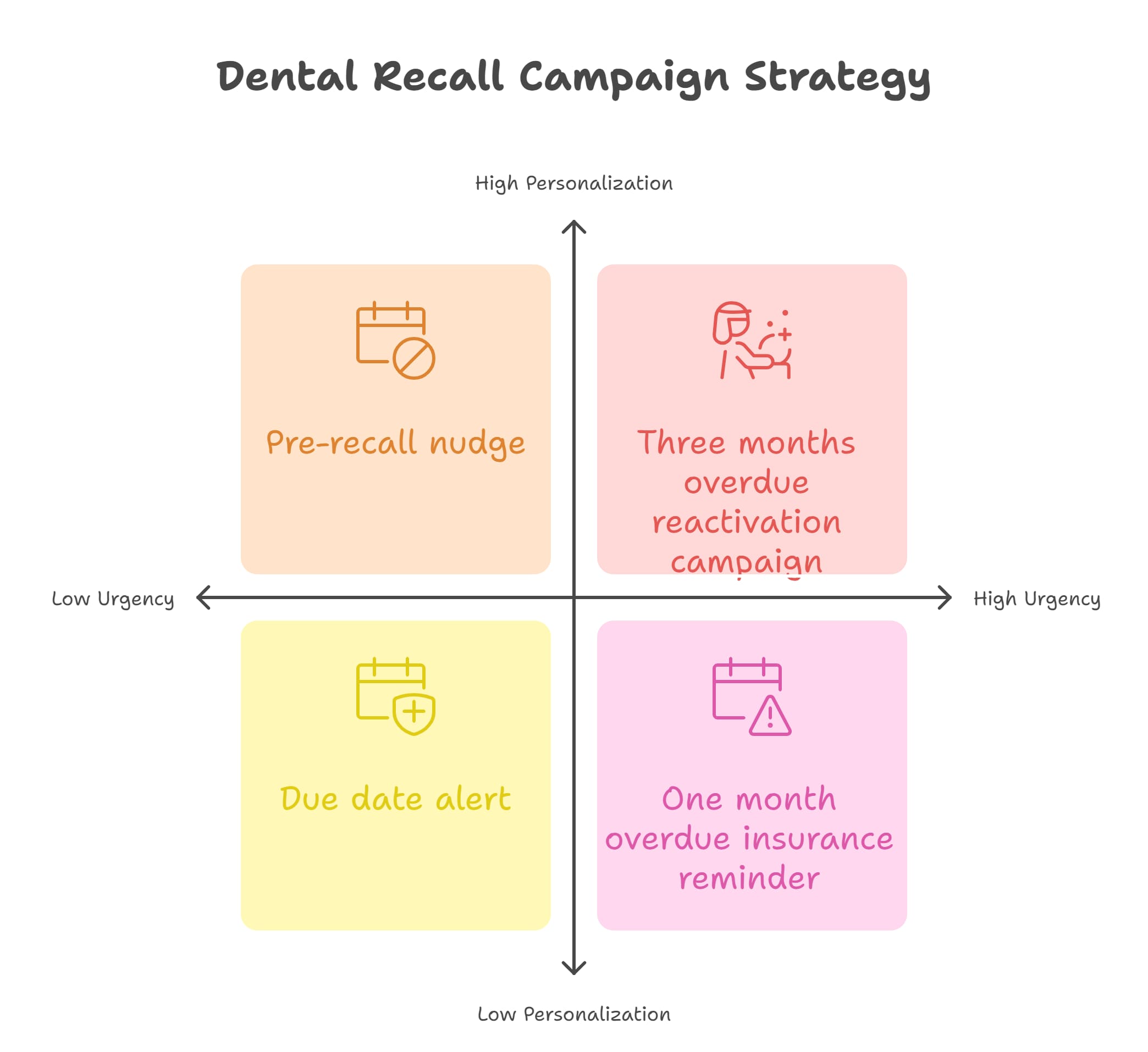
The Pre-Recall Nudge
Two weeks before a patient’s due date, send a friendly reminder if they haven’t scheduled their next appointment. The message should be conversational: “Hi Sarah, you’re due for your cleaning with Dr. Martinez in about two weeks. We have some great times available. Click here to schedule instantly.”
This early touchpoint catches patients before they’re officially overdue, maintaining continuity of care and showing that your practice is proactive about their dental health.
The Due Date Alert
On the exact date the patient is due for their hygiene appointment, send a direct message acknowledging they’re now due. This is the moment to make scheduling as easy as possible with a prominent online booking link.
The messaging should emphasize health benefits rather than guilt: “It’s time for your six-month cleaning! Regular visits help prevent cavities and gum disease. Schedule your appointment now.”
The Overdue Sequence
This is where your hygiene reappointment rate depends on persistence and smart messaging.
Two weeks overdue: Send a gentle reminder that acknowledges life gets busy. The tone remains friendly and helpful: “We haven’t seen you in a while! Let’s get your cleaning scheduled. Your dental health is worth thirty minutes every six months.”
One month overdue: Introduce urgency by mentioning insurance benefits. Many patients don’t realize their dental insurance resets annually: “Your dental benefits may expire at the end of the year. Don’t leave money on the table schedule your cleaning today to use your full benefits.”
Three months or more overdue: These patients need reactivation campaigns with potentially different messaging. Consider acknowledging the gap directly: “It’s been over a year since your last visit. We’d love to welcome you back! We’ve reserved a spot just for you.” Some practices offer modest incentives like free fluoride treatments to overcome reactivation resistance.
Channel Mix Strategy
Different communication channels serve different purposes in dental recall strategy.
Text messages deliver the highest open rates often above 95 percent within three minutes of sending. Use SMS for time-sensitive reminders and booking links. Keep messages under 160 characters when possible to avoid multi-part texts that some phones display awkwardly.
Email works best for educational content and detailed information. Send monthly newsletters with oral health tips, introduce new team members, or explain treatment options. Email also serves as a backup channel for patients who don’t respond to texts.
Automated voice messages add a personal touch for patients who prefer traditional communication. These work particularly well for older demographics who may find text messages impersonal.
Postcards still have value for certain patient segments, especially those over age sixty who appreciate tangible mail. However, postcards should supplement digital channels rather than serve as your primary recall method.
Technology and Integration Requirements
The effectiveness of hygiene recall automation depends entirely on seamless integration with your existing systems.
Practice Management System Synchronization
Your recall software must connect directly to your practice management system whether that’s Dentrix, Eaglesoft, Open Dental, Curve, or another PMS platform. This connection allows the software to read patient appointment histories, identify due dates, access contact information, and track communication preferences.
The sync should be bidirectional and happen in real-time or at minimum every few hours. Outdated data leads to embarrassing situations like texting patients who already scheduled or missing newly due patients.
Write-Back Capability
This feature is non-negotiable. When patients click your booking link and select an appointment time, that appointment must write directly back into your practice management schedule automatically.
Systems that merely collect appointment requests via email or require staff to manually transfer information defeat the entire purpose of practice management automation. You want true online scheduling integration that fills your schedule without staff intervention.
Smart Filtering Logic
Not every patient should receive automated recall messages. Your system needs intelligent filtering to exclude patients who have upcoming restorative appointments scheduled they’re already coming in, so additional recall messages are unnecessary and potentially annoying.
Patients with outstanding balances over a certain threshold should also be filtered out. These patients need personal phone calls to discuss payment arrangements before scheduling additional appointments.
Similarly, patients with comprehensive treatment plans already in progress don’t need hygiene recall messages until their restorative work is complete.
Best Practices for Maximum Conversion Rates
The difference between mediocre and exceptional results comes down to implementation details.
The One-Click Booking Rule
Every recall message must include a direct link to online scheduling where patients can book instantly without phone calls, logins, or complicated forms. Each additional click or required field reduces conversion rates dramatically.
The booking experience should show real availability from your practice management system, not generic calendar placeholders that require staff confirmation later.
Personalization Elements
Messages that use the patient’s first name and mention their preferred provider generate significantly higher engagement: “Hi Michael, Dr. Chen is looking forward to seeing you for your next cleaning.”
This personal touch shows you see patients as individuals, not database entries, even though the system is automated.
Strategic Timing
When you send messages matters as much as what you send. Industry data shows text messages sent between 10 AM and 2 PM on weekdays generate the highest response rates. Avoid early morning messages before 9 AM and evening messages after 7 PM unless you’ve specifically confirmed patient preferences for those times.
Tuesday, Wednesday, and Thursday typically outperform Monday and Friday for scheduling responses.
Family Account Grouping
When multiple family members need hygiene appointments, send one consolidated message to the primary account holder rather than separate texts to each person. A parent receiving five individual recall texts for their children finds it overwhelming rather than helpful.
Group messaging also makes it easier for families to schedule back-to-back appointments, improving your schedule efficiency.
Legal and Compliance Considerations
Automated communication systems must comply with federal and state regulations governing digital messaging.
TCPA Compliance
The Telephone Consumer Protection Act regulates automated text messages and calls. You need express written consent from patients before sending marketing messages via text. This typically means having patients check a box on intake forms or electronically consent through your patient portal.
There’s a distinction between informational and marketing messages. Appointment reminders for existing patients generally qualify as informational, but promotional messages about teeth whitening specials require explicit marketing consent.
Mandatory Opt-Out Mechanisms
Every automated text message must include clear instructions for opting out. The standard is “Reply STOP to unsubscribe.” Your system must honor these requests immediately and maintain a suppression list to prevent accidentally texting patients who’ve opted out.
HIPAA Considerations
Your messaging platform must be secure and HIPAA-compliant with appropriate Business Associate Agreements in place. While appointment reminders are generally permissible, avoid including specific treatment details in unencrypted text messages.
A compliant message says “Time for your cleaning with Dr. Smith.” A risky message says “Time for your deep cleaning to treat your moderate periodontitis.” Keep protected health information minimal in digital communications.
Measuring Success: Key Performance Indicators
You can’t improve what you don’t measure. Track these metrics to evaluate your dental patient retention efforts.
Recall percentage measures what portion of your active patient base is current on hygiene appointments. Calculate this by dividing the number of patients who’ve had hygiene visits in the past seven months by your total active patient count. World-class practices achieve 85 percent or higher.
Reactivation rate tracks patients who’ve been inactive for twelve months or longer but schedule appointments after receiving automated outreach. This metric directly measures your ability to recover lost patients.
Response rate shows what percentage of patients who receive recall messages take any action clicking links, replying to texts, or calling to schedule. Strong campaigns achieve 15 to 25 percent response rates.
Conversion rate measures actual scheduled appointments from recall outreach. This is your ultimate success metric, with top-performing practices converting 10 to 15 percent of recall messages into booked appointments.
No-show rate should decrease when you implement automated confirmations alongside recall messages. Patients who receive text confirmations twenty-four hours before appointments are significantly less likely to miss those appointments.
Automation as the New Standard of Care
Some dentists worry that hygiene recall automation feels impersonal or treats patients like numbers. This perspective misunderstands both automation and patient care.
Automation isn’t about removing the human element it’s about ensuring no patient falls through the cracks due to human limitations. Your team can’t possibly remember every patient’s due date or maintain perfect follow-up consistency across two thousand patients. Technology can.
The personal touch happens during the actual appointment when your team has time to connect with patients because they’re not exhausted from making hundreds of unproductive phone calls.
Patients don’t experience well-designed automation as impersonal. They experience it as convenient, respectful of their time, and indicative of a modern practice that understands how they want to communicate.
The practices that thrive in 2025 and beyond will be those that embrace practice management automation while maintaining genuine human connection during patient visits. These aren’t opposing goals they’re complementary strategies that together create exceptional patient experiences and sustainable practice growth.
Take Action Today
Start by auditing your current recall system. Calculate your actual recall percentage. Review how much staff time goes into manual outreach. Project the revenue you’re losing from inactive patients.
Then research hygiene recall automation platforms that integrate with your practice management system. Schedule demonstrations. Ask about write-back capabilities, TCPA compliance, and customer support.
Implementation takes weeks, not months. Most practices see measurable improvements in schedule density within the first sixty days. The return on investment is immediate when you consider the value of each recovered hygiene appointment.
Your schedule has empty chairs not because patients don’t value their dental health, but because your current system makes it too easy for them to forget. Automation solves this problem by meeting patients where they are with timely, convenient, compliant communication that keeps your schedule full and your patients healthy.
Your dental practice is losing patients faster than you’re gaining them, and it’s costing you thousands in revenue every single month.
The average dental practice loses 15 to 20 percent of its patient base annually not because patients find a new dentist, but because they simply forget to schedule their next cleaning.
Meanwhile, your front desk staff spends hours each day making phone calls that go straight to voicemail, leaving frustrated messages that rarely get returned.
What You’ll Discover:
- Why manual recall systems are killing your schedule efficiency and staff morale
- The exact multi-channel automation sequence that fills hygiene chairs consistently
- How to calculate the real revenue impact of every missed hygiene appointment
- Legal compliance requirements for automated patient communication
- The technology integrations that make recall automation actually work
The Leaking Bucket Problem in Your Practice
Imagine running a business where 15 to 20 percent of your customers disappear every year through no fault of your own. That’s the reality for dental practices relying on manual recall systems.
Here’s what’s happening: Your hygienist finishes a cleaning and tells the patient to schedule their next appointment in six months. The patient says they need to check their calendar first. They leave. Six months pass. Nobody follows up. The patient forgets. A year goes by. Now they’re inactive, and you’ve lost not just the hygiene revenue but all the restorative work that could have been diagnosed during regular preventative visits.
The front desk staff knows this is happening. They print recall lists every Monday morning and start dialing. Out of fifty calls, maybe ten people answer. Of those ten, perhaps three actually schedule. The rest promise to call back later and never do.
This manual chase creates staff burnout. Your front desk team didn’t go into healthcare to spend their days leaving voicemails. They want to help the patients who are physically in your office, not chase ghosts on a spreadsheet.
The solution isn’t working harder it’s working smarter through hygiene recall automation. Instead of your team chasing patients, automated systems nurture them through strategic digital touchpoints that meet patients where they already are: on their phones.
The promise is simple: full hygiene schedules, consistent cash flow, better patient health outcomes, and a front desk team that can focus on high-value patient interactions instead of phone tag.
What Is Hygiene Recall Automation?
Hygiene recall automation uses software to automatically identify, contact, and schedule patients who are due or overdue for their preventative care appointments, including prophylaxis cleanings and periodontal maintenance.
This technology connects to your practice management system, monitors patient appointment histories, and triggers communication sequences based on specific timelines without any manual intervention from your staff.
It’s important to distinguish between pre-appointing and recall. Pre-appointing happens when patients schedule their next hygiene visit before leaving your office ideally six months in advance. These patients are golden because they’re already committed.
Recall targets the patients who slipped through the cracks. Maybe they said they’d call back to schedule. Perhaps they had a scheduling conflict and forgot to reschedule. These are the patients who need systematic outreach to bring them back into your active patient base.
The modern approach to dental patient retention has evolved dramatically. The old system relied heavily on mailed postcards sent once or twice per year. While postcards still have value for certain demographics, they’re slow, expensive, and easy to ignore.
Today’s hygiene recall automation employs a multi-channel digital approach combining text messages, emails, automated voice calls, and online scheduling links. This meets patients on their preferred communication channels and makes booking appointments frictionless.
The Business Case: Why Automate Your Recall System?
The revenue impact of effective dental recall strategy is substantial and often underestimated by practice owners.
Consider the value of a single saved hygiene appointment. The hygiene visit itself generates revenue typically between one hundred fifty and three hundred dollars depending on your fee schedule and whether it’s a prophy or perio maintenance appointment.
But that’s just the beginning. During hygiene visits, your hygienist and dentist identify issues requiring restorative treatment. Industry data shows that hygiene appointments generate an average of two hundred to four hundred dollars in additional restorative treatment per visit through early diagnosis of cavities, worn restorations, and other issues.
Now multiply that by the number of patients who slip through your recall system annually. If you have a two thousand patient practice losing 15 percent annually, that’s three hundred patients. At a conservative four hundred dollars of total revenue per hygiene visit, you’re losing one hundred twenty thousand dollars in annual production.
Staff efficiency improvements are equally valuable. When you implement practice management automation for recall, your front desk team reclaims hours every week. Instead of cold calling uninterested patients, they focus on the patients standing in front of them, presenting treatment plans, answering questions about financing, and creating memorable experiences that generate referrals.
Consistency is where automation truly shines. Your best front desk employee gets tired on Friday afternoon. They take vacations. They call in sick. Automated systems don’t have these limitations. They send reminders at optimal times every single day, including weekends when patients are actually thinking about personal tasks like scheduling appointments.
Patient experience matters more than many dentists realize. Modern patients don’t want phone calls during work hours. A text message with a direct booking link respects their time and meets their expectations for digital convenience. This isn’t impersonal it’s patient-centered care adapted to how people actually live their lives in 2025.
The Anatomy of a Perfect Recall Campaign
Effective automating patient reminders requires a strategic sequence that guides patients from “due soon” through “seriously overdue” with escalating urgency and changing messaging.
The Pre-Recall Nudge
Two weeks before a patient’s due date, send a friendly reminder if they haven’t scheduled their next appointment. The message should be conversational: “Hi Sarah, you’re due for your cleaning with Dr. Martinez in about two weeks. We have some great times available. Click here to schedule instantly.”
This early touchpoint catches patients before they’re officially overdue, maintaining continuity of care and showing that your practice is proactive about their dental health.
The Due Date Alert
On the exact date the patient is due for their hygiene appointment, send a direct message acknowledging they’re now due. This is the moment to make scheduling as easy as possible with a prominent online booking link.
The messaging should emphasize health benefits rather than guilt: “It’s time for your six-month cleaning! Regular visits help prevent cavities and gum disease. Schedule your appointment now.”
The Overdue Sequence
This is where your hygiene reappointment rate depends on persistence and smart messaging.
Two weeks overdue: Send a gentle reminder that acknowledges life gets busy. The tone remains friendly and helpful: “We haven’t seen you in a while! Let’s get your cleaning scheduled. Your dental health is worth thirty minutes every six months.”
One month overdue: Introduce urgency by mentioning insurance benefits. Many patients don’t realize their dental insurance resets annually: “Your dental benefits may expire at the end of the year. Don’t leave money on the table schedule your cleaning today to use your full benefits.”
Three months or more overdue: These patients need reactivation campaigns with potentially different messaging. Consider acknowledging the gap directly: “It’s been over a year since your last visit. We’d love to welcome you back! We’ve reserved a spot just for you.” Some practices offer modest incentives like free fluoride treatments to overcome reactivation resistance.
Channel Mix Strategy
Different communication channels serve different purposes in dental recall strategy.
Text messages deliver the highest open rates often above 95 percent within three minutes of sending. Use SMS for time-sensitive reminders and booking links. Keep messages under 160 characters when possible to avoid multi-part texts that some phones display awkwardly.
Email works best for educational content and detailed information. Send monthly newsletters with oral health tips, introduce new team members, or explain treatment options. Email also serves as a backup channel for patients who don’t respond to texts.
Automated voice messages add a personal touch for patients who prefer traditional communication. These work particularly well for older demographics who may find text messages impersonal.
Postcards still have value for certain patient segments, especially those over age sixty who appreciate tangible mail. However, postcards should supplement digital channels rather than serve as your primary recall method.
Technology and Integration Requirements
The effectiveness of hygiene recall automation depends entirely on seamless integration with your existing systems.
Practice Management System Synchronization
Your recall software must connect directly to your practice management system whether that’s Dentrix, Eaglesoft, Open Dental, Curve, or another PMS platform. This connection allows the software to read patient appointment histories, identify due dates, access contact information, and track communication preferences.
The sync should be bidirectional and happen in real-time or at minimum every few hours. Outdated data leads to embarrassing situations like texting patients who already scheduled or missing newly due patients.
Write-Back Capability
This feature is non-negotiable. When patients click your booking link and select an appointment time, that appointment must write directly back into your practice management schedule automatically.
Systems that merely collect appointment requests via email or require staff to manually transfer information defeat the entire purpose of practice management automation. You want true online scheduling integration that fills your schedule without staff intervention.
Smart Filtering Logic
Not every patient should receive automated recall messages. Your system needs intelligent filtering to exclude patients who have upcoming restorative appointments scheduled they’re already coming in, so additional recall messages are unnecessary and potentially annoying.
Patients with outstanding balances over a certain threshold should also be filtered out. These patients need personal phone calls to discuss payment arrangements before scheduling additional appointments.
Similarly, patients with comprehensive treatment plans already in progress don’t need hygiene recall messages until their restorative work is complete.
Best Practices for Maximum Conversion Rates
The difference between mediocre and exceptional results comes down to implementation details.
The One-Click Booking Rule
Every recall message must include a direct link to online scheduling where patients can book instantly without phone calls, logins, or complicated forms. Each additional click or required field reduces conversion rates dramatically.
The booking experience should show real availability from your practice management system, not generic calendar placeholders that require staff confirmation later.
Personalization Elements
Messages that use the patient’s first name and mention their preferred provider generate significantly higher engagement: “Hi Michael, Dr. Chen is looking forward to seeing you for your next cleaning.”
This personal touch shows you see patients as individuals, not database entries, even though the system is automated.
Strategic Timing
When you send messages matters as much as what you send. Industry data shows text messages sent between 10 AM and 2 PM on weekdays generate the highest response rates. Avoid early morning messages before 9 AM and evening messages after 7 PM unless you’ve specifically confirmed patient preferences for those times.
Tuesday, Wednesday, and Thursday typically outperform Monday and Friday for scheduling responses.
Family Account Grouping
When multiple family members need hygiene appointments, send one consolidated message to the primary account holder rather than separate texts to each person. A parent receiving five individual recall texts for their children finds it overwhelming rather than helpful.
Group messaging also makes it easier for families to schedule back-to-back appointments, improving your schedule efficiency.
Legal and Compliance Considerations
Automated communication systems must comply with federal and state regulations governing digital messaging.
TCPA Compliance
The Telephone Consumer Protection Act regulates automated text messages and calls. You need express written consent from patients before sending marketing messages via text. This typically means having patients check a box on intake forms or electronically consent through your patient portal.
There’s a distinction between informational and marketing messages. Appointment reminders for existing patients generally qualify as informational, but promotional messages about teeth whitening specials require explicit marketing consent.
Mandatory Opt-Out Mechanisms
Every automated text message must include clear instructions for opting out. The standard is “Reply STOP to unsubscribe.” Your system must honor these requests immediately and maintain a suppression list to prevent accidentally texting patients who’ve opted out.
HIPAA Considerations
Your messaging platform must be secure and HIPAA-compliant with appropriate Business Associate Agreements in place. While appointment reminders are generally permissible, avoid including specific treatment details in unencrypted text messages.
A compliant message says “Time for your cleaning with Dr. Smith.” A risky message says “Time for your deep cleaning to treat your moderate periodontitis.” Keep protected health information minimal in digital communications.
Measuring Success: Key Performance Indicators
You can’t improve what you don’t measure. Track these metrics to evaluate your dental patient retention efforts.
Recall percentage measures what portion of your active patient base is current on hygiene appointments. Calculate this by dividing the number of patients who’ve had hygiene visits in the past seven months by your total active patient count. World-class practices achieve 85 percent or higher.
Reactivation rate tracks patients who’ve been inactive for twelve months or longer but schedule appointments after receiving automated outreach. This metric directly measures your ability to recover lost patients.
Response rate shows what percentage of patients who receive recall messages take any action clicking links, replying to texts, or calling to schedule. Strong campaigns achieve 15 to 25 percent response rates.
Conversion rate measures actual scheduled appointments from recall outreach. This is your ultimate success metric, with top-performing practices converting 10 to 15 percent of recall messages into booked appointments.
No-show rate should decrease when you implement automated confirmations alongside recall messages. Patients who receive text confirmations twenty-four hours before appointments are significantly less likely to miss those appointments.
Automation as the New Standard of Care
Some dentists worry that hygiene recall automation feels impersonal or treats patients like numbers. This perspective misunderstands both automation and patient care.
Automation isn’t about removing the human element it’s about ensuring no patient falls through the cracks due to human limitations. Your team can’t possibly remember every patient’s due date or maintain perfect follow-up consistency across two thousand patients. Technology can.
The personal touch happens during the actual appointment when your team has time to connect with patients because they’re not exhausted from making hundreds of unproductive phone calls.
Patients don’t experience well-designed automation as impersonal. They experience it as convenient, respectful of their time, and indicative of a modern practice that understands how they want to communicate.
The practices that thrive in 2025 and beyond will be those that embrace practice management automation while maintaining genuine human connection during patient visits. These aren’t opposing goals they’re complementary strategies that together create exceptional patient experiences and sustainable practice growth.
Take Action Today
Start by auditing your current recall system. Calculate your actual recall percentage. Review how much staff time goes into manual outreach. Project the revenue you’re losing from inactive patients.
Then research hygiene recall automation platforms that integrate with your practice management system. Schedule demonstrations. Ask about write-back capabilities, TCPA compliance, and customer support.
Implementation takes weeks, not months. Most practices see measurable improvements in schedule density within the first sixty days. The return on investment is immediate when you consider the value of each recovered hygiene appointment.
Your schedule has empty chairs not because patients don’t value their dental health, but because your current system makes it too easy for them to forget. Automation solves this problem by meeting patients where they are with timely, convenient, compliant communication that keeps your schedule full and your patients healthy.


